



 10 November ,2026
 Depreet Singh
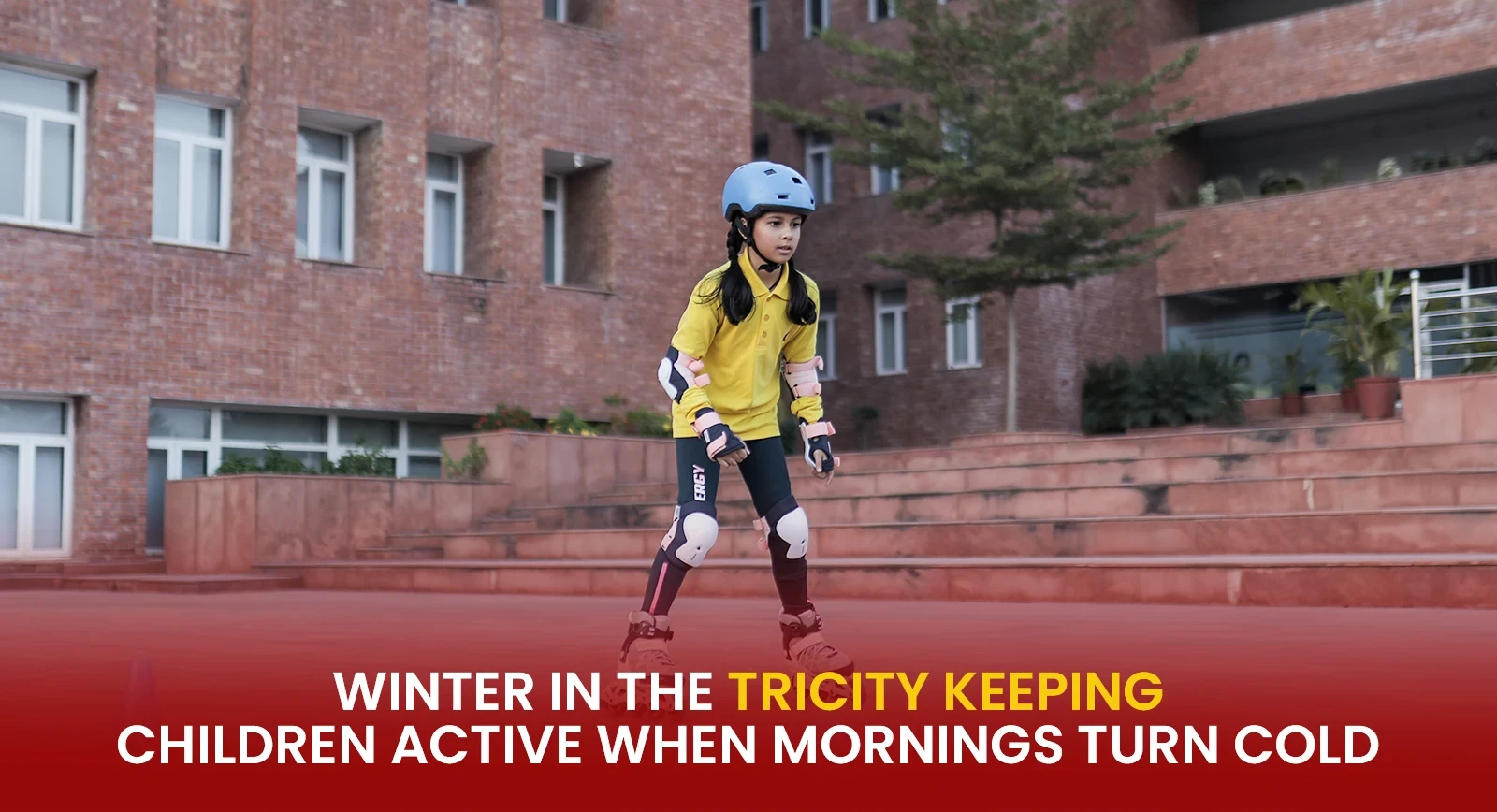
The alarm rings at 6:30. Outside, the fog is so thick you cannot see the gate. Your child pulls the blanket up and asks for five more minutes. Most Tricity parents know this morning well.
Parents searching for the best school in Panchkula often ask about sports fields and playtime. But in winter, staying active depends just as much on small habits at home. This guide shares practical, research-backed ideas to keep children moving safely until spring.
Why Cold Mornings Slow Children Down
Tricity winters bring real cold, not just a chilly breeze. That is why it helps to ask how the best school in Panchkula for your family plans for these weeks. Here is what changes when the temperature drops.
- Cold waves are real: In early January 2026, the IMD warned of cold wave conditions in parts of Punjab, Haryana and Chandigarh, along with dense to very dense morning fog.
- Fog cuts play time: Thick fog lowers visibility on roads and in parks. Many families keep children indoors until it clears, which can quietly remove an hour of daily movement.
- Less sun, more screens: Short days push children toward TV and phones. A 2025 hospital-based study in Eastern India found low vitamin D levels in 80.6% of the adolescents it examined.
None of this is permanent. A few simple changes can keep children active through the coldest weeks.
What New Global Data Tells Parents
The latest WHO figures show that low activity is a year-round problem. Winter simply makes it worse.
- No fully active day for one in four: In 2025, around one in four adolescents aged 11 to 17 did not record even one day with 60 minutes of moderate to vigorous activity in the previous week.
- Girls are left behind: 28% of girls reported no active days, compared with 22% of boys. Girls were less active than boys in almost every country.
- Movement helps learning: WHO links physical activity with fewer anxiety and depression symptoms, plus better attention, memory, classroom behaviour and school performance.
WHO Director-General Dr Tedros Adhanom Ghebreyesus said, “The answer is not to tell adolescents to try harder.” His point is simple. Schools and communities should make movement an ordinary, safe part of each day. The same idea works at home.
Easy Ways to Keep Children Moving This Winter
You do not need a big garden or costly classes. Short daily habits work best, as long as safety comes first.
Indoor Ideas for Foggy Mornings
- Ten-minute dance breaks: Play two or three favourite songs before school or after homework. Dancing lifts the heart rate quickly and needs very little floor space.
- Living room challenges: Try balloon volleyball, skipping, hopscotch on tape lines or a cushion obstacle course. Older children can add squats, lunges or a short stretching routine.
Smarter and Safer Outdoor Time
- Shift play to the afternoon: Fog often lifts later in the day. Move cycling, park visits or badminton to the warmer afternoon hours, when the sun is out.
- Dress in thin layers: Several light layers hold heat better than one bulky jacket. Children can peel one off when they warm up, so they stay dry and comfortable.
- Use the AQI reading: Check the day’s air quality before outdoor play. On “poor” days, swap running games for gentle walks. On “very poor” or “severe” days, move all exercise indoors.
- Respect fog and cold alerts: Skip outdoor play when fog makes roads and parks hard to see. On IMD cold wave days, keep outdoor time very short, or skip it, and follow school advisories.
Pick two or three ideas and repeat them daily. A steady routine matters more than a hard workout, and on the worst days, staying in is the right call.
Questions to Ask Schools About Winter Routines
Children spend a large part of their day at school. When you compare top schools in Panchkula, look at how physical activity continues once the cold sets in.
What a Good Winter Routine Looks Like
- Indoor PE sessions: When fields are foggy or wet, physical education moves to halls, courts, or pools. Children still get a full session instead of a free period.
- Short movement breaks: Two or three minutes of stretching or simple exercises between lessons help children who sit for long periods and can help them refocus.
- Weather-based sports periods: Outdoor games shift to warmer, clearer hours, usually late morning or afternoon. Timings can differ widely across schools in Panchkula, Haryana.
- Safety before schedule: On severe cold, dense fog or very poor air days, a good school keeps children active indoors rather than sending them out just to meet a timetable.
Questions to Ask on Your Visit
- Where does PE happen in winter?
Ask to see the covered spaces and how often each class actually uses them in December and January.
- Is there a written plan for poor air days?
A clear plan shows the school treats children’s health as part of daily planning, not as an afterthought.
- Do children still move every day?
Ask how many active minutes a typical winter school day includes, both during PE and between lessons.
Typing “Panchkula best school” into a search bar brings up many names. These questions help you find the one that suits your child.
Winter Activity at the DLF Valley Campus
Aravali International School, Panchkula, is a CBSE-affiliated school on a 5.5-acre campus next to the Chandigarh-Shimla expressway. Its facilities are worth a closer look when the weather turns cold. You can see them on the official Panchkula campus page.
- Sports complex: The official campus page lists fields, courts and a swimming pool. During your visit, ask which of these spaces stay in regular use when mornings are foggy.
- Indoor swimming pool: The campus page also highlights an indoor pool. Ask about winter swimming schedules, water and changing-room heating, and which grades use it.
- Indoor activity plans: Ask how PE, clubs and sports practice are adjusted on cold wave or poor air days, and how parents hear about these changes.
The school office can confirm current winter timings and schedules.
Keep Them Moving Until Spring
Tricity winters do not have to be still and sleepy. Whether you are shortlisting the best school in Panchkula or simply want a healthier season at home, start with one change this week. Want to see how an active school day looks in the colder months? Book a campus visit at Aravali International School, DLF Valley, and ask your questions in person.
FAQs
1. How much activity does my child need in winter?
WHO uses 60 minutes of moderate to vigorous activity as the mark of an active day for adolescents. You can split it into short bursts. Three 20-minute sessions of play, dance or brisk walking work just as well on cold days.
2. Is it safe for children to play outside in cold, foggy weather?
Not always. On mild days, short outdoor play in thin layers is fine. During severe cold, dense fog or very poor air, keep children indoors. If your child shivers hard or feels numb, bring them inside and warm them up slowly.
3. Should I give my child vitamin D drops in winter?
Only after talking to your paediatrician. A 2025 hospital study in Eastern India found low levels in many adolescents. It also found cases of excess vitamin D, mostly in infants. A blood test helps your doctor decide the next step.
4. What should I look for in the best schools in Panchkula for winter activity?
Look for covered sports spaces, flexible game times, and a clear plan for poor-air days. Ask how often children get short movement breaks between lessons. If possible, visit in December or January to see the school’s real winter routine.
5. Does Aravali International School have indoor sports facilities?
The DLF Valley campus page lists a sports complex with fields, courts and a swimming pool, and highlights an indoor pool. For current winter schedules and how students use these spaces, please contact the school’s Panchkula admissions team directly.